
close

Neo-Babilon

Știri în diferite limbi de circulație internațională

Neo-Babilon

INDUMNEZEIRE VERSUS POSTUMANISM

posthumanism

Dragii mei,

Vad ca sunt unii pe aici pe net care au cumva senzatia ca as exagera (sau ca sunt nebun) in ce priveste ceea ce urmeaza istoric. Probabil n-au citit nimic sau profita de faptul ca altii nu au citit despre aceasta INGROZITOARE ideologie / filosofie sau ma rog…… care se numeste POSTUMANISM.

O sa incerc sa explic in cuvinte foarte simple la ce se refera.

Acum suntem in perioada in care se urmareste ca omul sa nu mai apartina nici unei fel de comunitati. Sa nu mai existe si sa nu mai activeze IN NICI UN FEL din nici un colectiv identitar
– Sa nu mai apartina NICI UNEI TARI
– Sa nu mai apartina NICI UNEI RELIGII
– Sa nu mai apartina NICI UNUI GEN (masculin sau feminin)
– ETC

Se pare ca beneficiind de slabiciunile oamenilor reuseste. Mult mai subtil insa pentru ca se adreseaza mandriei, parerii de sine, frustrarilor, indreptatirii de sine si slavei desarte care il ispitesc aproape irezistibil pe om.
POSTUMANISMUL (adica ce urmeaza dupa asta) merge in 2 directii:
– TRANSUMANISMUL care se ocupa de asa zisa “imbunatatire a omului”. Stiintifica, tehnologica si “spirituala”. Sustine ca omul poate deveni nemuritor prin tehnologie. Deci ce nevoie mai aveti de viata vesnica?
– POSTUMANISMUL pur care are ca scop ATENTIE!!! DECONSTRUCTIA OMULUI prin DISTRUGEREA viziunii dualiste si DISTRUGEREA MOSTENIRII IERARHICE

Dau un exemplu de viziune dualista in opinia lor: Faptul ca omul este creat dupa chipul si asemanarea lui Dumnezeu este o viziune dualista pentru ca pune Omul mai presus de restul fiintelor si asta este discriminare.

Nu vi le insir pe toate ca va sta mintea in loc. E suficienta asta. Ce vrea sa zica? Daca o sa va referiti la ORICE organism viu sau mineral sau robot sau mecanism sau orice altceva ca fiind inferioare omului insemna ca veti comite o DISCRIMINARE si aveti o “gandire neinbunatatita” si neconforma cu transumanismul. Adica din acel moment sunteti un dusman al progresului care “trebuie instaurat ACUM”, fara intarziere.

Asta imi aduce aminte ca in comunism daca indrazneai sa zici ca exista Dumnezeu nu erai un “om nou” materialist dialectic. Huoo!! – strigau toti.

Revin. Transgender si Politically Correctness sunt doar incalzirea. REALIZATI IMPLICATIILE?? Numai daca se aplica asta. Sigur TOATA gargara asta e invelita in cuvinte de tip PROGRES, EVOLUTIE, ADAPTARE ISTORICA, MEDIERE etc si e amestecata cu exemple istorice negative ca sa dea o forma acceptabila cat mai multor oameni. Credeti-ma ca VOR RAGE IN PIETE ca asta vor fara sa-si dea seama de consecinte.

ASTA ni se propune in locul INDUMNEZEIRII omului care este posibila prin intruparea Lui Hristos – Dumnezeu si OM si prin Sf. Taine.

SI ca sa n-avem vorbe dau un link cu una din cele mai cunoscute propovaduitoare al Posumanismului – Francesca Ferrando (opusul Pr. Sofronie -care propovaduieste indumnezeirea omului). Daca nu stiti engleza chemati pe cineva sa va traduca. Merita! Satanism pur imbracat in concepte frumoase – 25min.

(Cătălin Rusu)
mai mult
Neo-BabilonPromovate

Two Cardinals Break Ranks With Pope Francis And Warn The Death Of Western Civilization Is Ahead While Also Claiming ‘Mass Immigration’ Really Is An ‘Islamic Invasion’

not_compatible

– It’s Not ‘Hate’ To Call Out The Barbaric & Oppressive Politics Of ‘Islam’

In this May 24th story over at Infowars, Paul Joseph Watson reports upon a rarety in 2019: a US Cardinal in the Catholic Church is warning that resisting large-scale immigration from Muslim countries “is the responsible exercise of one’s patriotism“, remarks that are already triggering liberals.

While in ‘politically correct America‘ in 2019, criticism of Islam or the ‘gay agenda‘ is often called ‘hate speech‘, as Cardinal Raymond Burke correctly points out, Islam, by its very definition, “believes itself to be destined to rule the world”. Warning that many Muslims move to European nations because they are “opportunists”, Cardinal Burke also warned that the very existence of Islamic ‘no go zones‘ is proof that many Muslims could care less about ‘the rule of law‘ in the countries they are moving into and have every intention of imposing their own ‘law‘, sharia, which is really ‘tyranny‘.

With it now a crime in Islamo-fascist Europe to speak the truth about Islam’s prophet Mohammed being a pedophile after a European high court last year upheld the criminal conviction of a 47-year old woman who correctly pointed out that Mohammed had married a 6-year-old girl, while twitter has warned prominent Conservative figures that some of their tweets violate Pakistan’s blasphemy laws, it’s not too much of a stretch to suggest the globalists are attempting to impose Islamic law upon us all now. Why is an American company concerned with Americans violating Pakistan’s law? Much more below but first, from this Infowars story from Cardinal Raymond Burke.:

“To resist large-scale Muslim immigration, in my judgment, is to be responsible in the sense of making sure that those who are immigrating to the country – remember that the definition of the Church’s teaching is that the individuals are not able to find a way of living in their own country and this is not true of immigrants who come who are opportunists, and in particular in the case of Islam, which by its definition believes itself to be destined to rule the world — coming in large numbers to countries,” said Burke, adding, “You don’t have to be a rocket scientist to see what’s happened.”

Pointing to the existence of Islamic no-go zones where “Muslim immigrants have set up their own legal order,” Burke said opposing the spread of this is patriotic.

“And so, to be opposed to wholesale, or large-scale Muslim immigration is, in fact, as far as I’m concerned, the responsible exercise of one’s patriotism in the sense that we — yes, people are true refugees who can’t live in their own country we must receive them and help them in every way. But this is not the case when you have simply a large-scale immigration,” he said.

Fortunately, Cardinal Burke isn’t the only Catholic Cardinal pointing out the ‘truth before our eyes‘ that so many are missing and despite Pope Francis urging European nations to take in as many illegal immigrants as they can, Cardinal Robert Sarah was even more forceful in his comments, condemning the Pope for using the Word of God to promote illegal immigration and the overthrow of nations.

“It is a false exegesis to use the word of God to promote migration.”

Sarah also said that Europe was dying because people had stopped having children and had lost its sense of origin.

“I’m afraid that the West will die,” said Sarah, adding that it was being invaded by other cultures that would soon dominate.

On April 9th of 2019, the Tennessee Star put out a story titled “Commentary: Cardinal Robert Sarah Warns the West Will Disappear”within which Cardinal Sarah tells us why he knows what he’s talking about; he, pictured above, is from a majority Muslim nation.

Cardinal Robert Sarah, the Vatican’s prefect of the Congregation for Divine Worship and the Discipline of the Sacraments, has issued a stark warning to all inheritors of Europe’s Judeo-Christian culture: The “West will disappear” as a result of mass migration and “Islam will invade the world” and “completely change culture, anthropology, and moral vision” unless we bend the arc of our culture back toward its Judeo-Christian roots.

Cardinal Sarah’s new book, Evening Draws Near and the Day is Nearly Over, is causing controversy because it explicitly identifies Muslim migration as a harbinger of the collapse of the West.

“If the West continues in this fatal way, there is a great risk that, due to a lack of birth, it will disappear, invaded by foreigners, just as Rome has been invaded by barbarians,” said Sarah in a video interview, “My country is predominantly Muslim. I think I know what reality I’m talking about.”

And as the Church Militant had reported also back in April, the collapse of Western Civilization will largely be brought about by our rejection of God. Though Cardinal Sarah also claimed a ‘great renewal‘ will be ahead for those ‘living vibrantly within faith‘.

Cardinal Robert Sarah is saying that even though Western civilization is on the verge of collapsing — owing to its rejection of God — a great renewal will come from those who are vibrantly living the Catholic faith.

During an April 5 interview highlighting the publication of his latest book The Day Is Far Spent, Cdl. Sarah tells the Catholic Herald that Western civilization is collapsing. “A West that denies its faith, its history, its roots, and its identity is destined for contempt, for death, and disappearance,” warns the Vatican’s chief liturgist.

Sarah follows this warning with a description of how the renewal will occur.

“But I would like to point out that everything is prepared for a renewal,” he explains. “I see families, monasteries, and parishes that are like oases in the middle of a desert. It is from these oases of faith, liturgy, beauty, and silence that the West will be reborn.”

And giving us another look at where the globalists had brought the world over the past decade+ with the insanity of ‘political correctness‘ on full display, as Paul Joseph Watson also reported in this recent story over at Infowars, the British army has released the information sheet seen above which helps people to identify and report ‘right wing extremists‘ based upon various character traits.

And while looking over the list, I can see that I personally fall into many of their categories, this Orwellian list also reminds us of the Obama-era Fusion Center reports based largely on the now discredited Southern Poverty Law Center’s work which demonized patriots, Oathkeepers, militia groups, Christians, Conservatives and ‘freedom loving Americans.’

As this March of 2018 story over at Front Page Mag had pointed out, government fusion centers were spying on Patriots in all 50 US states, going so far as to use intimidation tactics upon an activist who sought information on a mosque which had an openly anti-Semitic Imam. The activist was actually hassled by West Virgina state police over a completely lawful request. Why have fusion centers been protecting anti-Semitic Imam’s? As WND had reported back in August of 2014, according to former CIA officer Clare Lopez, while he was US President, Barack Obama “switched sides in the war on terror, moving America closer towards its Muslim enemies.

And while the British army claims that their XRW list is an attempt to stop ‘radicalization‘, as this Infowars story points out, “more British Muslims have joined ISIS than joined the British Army, so it doesn’t appear to be working.” From Infowars.:

The British Army has released an information sheet encouraging members of the military to report others as right-wing extremists if they express a myriad of beliefs, including describing themselves as “patriots”.

The sheet is entitled ‘EXTREME RIGHT WING (XRW) INDICATORS & WARNINGS and encourages members of the military to “Look out for individuals who…describe themselves as patriots.”

The notion that describing oneself as a “patriot” equates to right-wing extremism is ludicrous. Being a patriot should be a pre-requisite to join the Army.

Some of the other indications of ‘right-wing extremism’ are equally alarming. They include;

– People who “describe multicultural towns as lost”.

– People who “use the term ‘Islamofascism’”.

– People who refer to political correctness as a “left wing plot”.

– People who are “angry” about the loss of “national identity”.

– People who “make inaccurate generalisations about the left or government”.

– People who refer to those who challenge any of these views as being “indoctrinated”.


In this new story over at the Clarion Project, they ask “Is Ilhan Omar Practicing Taqiyya?“, a story which echoes our May 9th ANP story titled “Evidence Democrats And The MSM Have Embraced Islam’s Principal Of ‘Taqiyya’: They Insanely Believe They Can Blatantly Lie To The American People & Are ‘Above The Law Of The Land’!” within which we pointed out the many different ways both the Democratic party and the mainstream media have used ‘taqiyya’ upon the American people.

For those who are unfamiliar with the word, ‘taqiyya‘ is the very first thing that people must understand about Islam going forward. Taqiyya is branded as the stealth art of lying for Muslims. As this entry over at the website “The Religion of Peace” points out, Muslim scholars teach that Muslims should generally be truthful to each other, unless the purpose of lying is to “smooth over differences” or “gain the upper-hand over an enemy”. (ANP: Just let that last one sink in!!!)

There are several forms of lying to non-believers that are permitted under certain circumstances, the best known being taqiyya (the Shia name). These circumstances are typically those that advance the cause of Islam – in some cases by gaining the trust of non-believers in order to draw out their vulnerability and defeat them

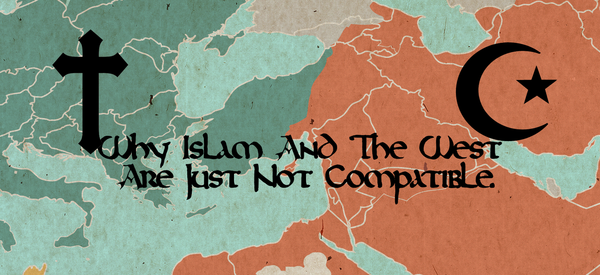
And while we know that not all Muslims are evil and want to ‘take over the world‘, as both Cardinal Burke and Cardinal Sarah clearly point out, the political philosophy of Islam is NOT compatible with freedom nor with Western civilization due to the fact that the religion of Islam demands followers impose it upon everybody. So while the left will argue that it’s ‘hatred‘ to ‘hate‘ Islam, it’s absolutely not ‘hatred‘ to call out the barbaric and oppressive politics of Islam.

And with most on the left suffering from a major disconnect, supporting both ‘gay rights‘ and ‘Islam‘ despite the fact that most Islamic nations have no ‘gay rights‘ and will quickly put gays to death, one could easily argue that pointing out the oppression and barbarism of Islamic political systems is actually ‘love‘ rather than ‘hate‘ as no one deserves to be stoned to death simply for being gay.

In the first video below, Paul Joseph Watson tells us that almost every factor that precedes the collapse of great civilizations has already been met by the West, and with a clear drive by Democrats here in America to ‘take down‘ the nation showing that those who are on the outside pushing for our extinction are being aided by ‘enemies within‘, we’re moving that directly at breakneck speed. In the 2nd and final video below from Infowars, Cardinal Burke implores us to heed his warnings.

(Stefan Stanford – allnewspipeline.com)

mai mult
Neo-Babilon

Why do some Russians Miss the Iron Fist?

news-644850_1280

Denis Volkov considers how reassessments of Stalin’s legacy reflect Russians’ changing views on the roles of the individual and the state

The popular image of the Soviet dictator, much like that of any other important historical figure, always combines negative and positive assessments of their rule. To quote the words of one participant in our focus group discussions, “it’s impossible to unequivocally say that everything was good or that everything was bad; there were excesses, but there were also bright sides.” Repressions, executions, and military blunders are all inherent characteristics of the image of Josef Stalin; only a small number of Russians outright deny these facts. What changes is not so much Russians’ overall assessment of Stalin, as the balance between positive and negative evaluations of the Soviet leader. That balance constantly shifts. In Russia today, that balance is in the favour of the former; while negative aspects have not completely disappeared from Stalin’s popular image today, they have certainly receded into the background. Stalin is now primarily seen as the man who won the Great Patriotic War, the man who forged the Soviet Union’s superpower status; the leader who through his steely resolve was able to bring order to the country.

Over the past decade, the number of Russians who felt that Stalin was a criminal has gradually decreased: from 38% in 2009 to 26% in 2017. Meanwhile, the number of Russians who supported erecting a monument to Stalin grew from 26% to 47% in the same period. This March, the number of Russians who describe Stalin’s role in Russian history as positive reached a record high of 70% (in comparison, in the latter half of the 2000s, this figure barely reached above 40%.) Furthermore, in 2012 and 2017 Stalin won first place in the “outstanding people of all times and nations” poll, a ranking of the most popular historical figures. These data paint a clear picture; it is hard to draw any other conclusion than to state that attitudes to Stalin are improving, and that the Soviet leader is gradually being rehabilitated in Russian public opinion.

The ruling authorities and their policies have played a crucial role in this public reevaluation of Stalin. Nevertheless, it would be a stretch to say that this positive image of Stalin is entirely the result of promotion “from above.” Instead, this is a side effect of the regime’s instrumentalisation of Victory Day to maintain its own legitimacy. As the emotional day approaches, the population unites around the “marshals and soldiers” (in the words of the song Let Us Bow to Those Great Years); the president and ordinary citizens alike march together in the Immortal Regiment procession. At the same time, there is no critical discussion of the cost of that victory, nor the mistakes of the Stalinist leadership. It is also forbidden to question existing myths about the war. A telling example of this occurred in 2015, when an archivist publicly stated that the story of Panfilov’s 28 Guardsmen (a group of Central Asian soldiers renowned for their heroism during the defence of Moscow – ed.) was a myth invented by Soviet newspapers to raise morale, he was strongly rebuked by Minister of Culture Vladimir Medinsky. Furthermore, as the ban on distributing the British comedy The Death of Stalin reveals, even laughing at the Stalinist leadership is now beyond the pale. In this context, we should not be surprised by the inner logic of some statements made by focus group participants: “Under Stalin, the Soviet Union won the war, which means that its politics, however awful they may have been, turned out to be vindicated. Otherwise the outcome of the war would have been impossible.”

The second justification aired by the focus group participants can be summarised as follows: Stalin turned the Soviet Union into a superpower. Thanks to Stalin’s “wise leadership,” continued the respondents, the country not only won the war but “built up industry,” developed nuclear weapons, controlled half of Europe, earning the grudging respect of the entire world. The annexation of Crimea in 2014 also resonated with such explanations; after the annexation of the peninsula, Russians’ convictions that their country was rising to great power status once more peaked for the first time since the collapse of the Soviet Union. As most Russians saw it, according to opinion polls, “Stalin created the state, while Gorbachev and Yeltsin led it to ruin.” As a result, Russians became even readier to recognise the merits of the Generalissimo. The ensuing tensions between Russia and the West, which have continued since 2014, also nourish this worldview; without them, it would be impossible to imagine such a brazen justification for the Molotov-Ribbentrop Pact, as Putin made in 2015. In all likelihood, statements like these are generally intended to irritate the West. However, to a Russian audience they would probably have sounded like a blessing from on high to publicly justify all of Stalin’s policies.

Focus group participants also explained their positive attitudes to Stalin with the words that “under Stalin, there was more order.” Yet this conception of “order” is also subject to the influence of today’s political and economic factors. A distinguishing feature of our current moment is that this idealised “order” has taken on a very broad meaning: when they invoke “order,” respondents do not just mean “low prices,” “confidence in the future,” or the state “taking care of ordinary people,” but also “fighting against corruption.” According to respondents, Stalin “did not leave behind palaces” when he died; “he left only a single pair of boots.” Stalin was, they claimed, “an ascetic,” and kept his entourage in line “with iron fists.” Under Stalin, they continued, “there were no oligarchs,” and “it was impossible to make off with several billion and lounge around in the Maldives.” These justifications for the dictator’s legacy are clearly replete with references to the present day; the Stalinist leadership is contrasted favourably with Russia’s ruling elites of today. Discontent with the elite is on the rise, and Vladimir Putin is by no means an exception; it is not uncommon to hear complaints that Putin has “surrounded himself with crooks,” that he “indulges his entourage,” or is “too kind to the corrupt.” Just as Russians are becoming more and more disgruntled with corruption in government, as opinion polls clearly show, so do more and more often them look back fondly to Stalin and his iron fisted rule.

When it comes to Stalin’s “firm hand,” it is necessary to make one important clarification. A significant number of focus group participants had a crafty, if not self-serving, understanding of its use: namely, a “firm hand” is crucial, but only to restore order at the top; ordinary citizens will not feel its wrath. The “firm hand” is for ministers, governors, oligarchs, and the president’s inner circle. These days, even participants of the focus groups who support Putin admitted to sociologists that while the president has a “firm hand,” he “does not always use it for its intended purpose.” “This firm hand caresses some and gives gifts to others,” they conceded. In other words, whatever virtues respondents find lacking in the current government, they then attribute to Stalin. The more disappointing the conduct of the authorities, and the lower its approval ratings, the sooner this happens.

It is no coincidence that this yearning for a “firm hand” to restore order and the related rehabilitation of Stalin are occurring at the same time as an increasing number of people believe that the Stalinist repressions were exclusively directed at the Soviet Union’s top leadership, intelligentsia, and oppositional elements within the party nomenklatura. We know that this is a misconception thanks to the many historical studies proving the contrary. Nevertheless, the number of people who believe that the repressions were directed against “the entire population” over the past two decades has decreased one and a half times: from 58% in 2000 to 41% in 2017. Might this not be connected with the twofold reduction in the number of those who believe that “repression can never be justified”(which fell from 72% in 2007 to 39% in 2017)? Thus, the rehabilitation of Stalin’s image runs parallel to the public’s increasingly distorted ideas about the Stalinist repressions.

Finally, the rehabilitation of Stalin indirectly strengthens the widespread view in Russia that the state is the only possible driving force for any social changes and improvements. In this worldview, the boundaries of the state extend far beyond the president and the ruling party, encapsulating any nonprofit organisation which aims to help ordinary people. Many Russians believe that staff of these organisations are representatives of the social services; a telling example of their incomprehension when faced with any organised initiative to help people in need which functions without plans and orders dictates from above. But it is not just vocal supporters of the authorities who rely on the state; even those disgruntled citizens who take to the streets in protests frequently articulate their grievances by appealing to the authorities. For them, a protest is an opportunity to catch the attention of the helmsman of state and draw his attention to their problems. There have been many occasions when, after his focus groups have drawn to an end, respondents have approached the author and asked him to relay their concerns “upwards”…

By this logic, the solution to any social problem can only be the further strengthening of the state, its increased role in the economy, and the institution of even tougher punishments. All of the above are, of course, traits of the notorious Stalinist “firm hand.” This is largely due to the fact that most Russians are either not aware that other solutions exist, or see them as discredited due to the failures of the 1990s and the potency of television propaganda. At the same time, many Russians do realise that government regulation is ineffective due to corruption, but still do not see any alternatives. Hence their requests for a “firm hand” to solve everything. The worse the situation becomes, the greater the demand. Therefore, Stalin’s rehabilitation is at least partly a consequence of the lack of widespread ideas about possible alternatives to Russia’s current political course.

In conclusion, the reasons for these changes in public attitude towards Stalin’s legacy are very diverse. They are a reaction to the authorities’ policies, the declining authority of Russia’s rulers, and wider economic stagnation. At least in part, they are a consequence of the mythologisation of Stalin and distorted understandings of the Stalinist period and the repressions of the 1930s. In the absence of popular alternatives, the only demand to fall back on is to strengthen the state and hope that a “firm hand” can point the way to an escape from this crisis. These conditions are so strong that they might as well count as “force majeure.” In these circumstances, the civic activists and organisations which fight to ensure that the crimes of the Stalinist regime are not forgotten face an uphill struggle; all they can do is try their best to convey their knowledge to their fellow citizens. But despite their best efforts, the popular rehabilitation of Stalin in Russia is an unfortunate fact.

(ridl.io)

mai mult
Neo-Babilon

Old Masters Reimagined with Photographs of Their Contemporary Counterparts

foto

New York-based artist Ken Francis sees the world’s most famous landmarks differently.

Whether it’s Central Park in New York, Notre Dame in Paris or Gullfoss waterfall in Iceland, Francis applies his signature combination of photography and graphic art to give new dimensions to the images he takes during his copious travels.

“I take great inspiration from art history,” Francis told Sotheby’s, who gave the artist free rein to create original images combining the works in our Master Paintings auctions with photographs from his international adventures.

“The color palette, light, composition of landscapes and even particular brush strokes all influence how I compose and shoot my own work.” Ahead, discover Francis’s alluring takes on Sotheby’s Old Master paintings, sure to spark wanderlust and curiosity in all who view them. –Stephanie Sporn

(sothebys.com)

mai mult
Neo-BabilonPromovate

Masacrul despre care nu vorbește nimeni: 280 de creștini uciși în ultimele săptămâni de jihadiști musulmani în Nigeria

Crestini-in-Nigeria
Știrea privind atacul de vinerea trecută, din Noua Zeelandă, a făcut înconjurul lumii. Despre ceea ce se întâmplă într-un alt colț al lumii nimeni nu suflă o vorbă, cu excepția unor site-uri occidentale creștine.

Violențele din Nigeria, unde islamul reprezintă religia dominantă în nordul țării, în timp ce în partea de sud religia creștină este predominantă, fac noi victime printre creștini. Teroriștii musulmani din grupul păstorilor Fulani și gruparea jihadistă  Boko Haram și-au intensificat atacurile,  potrivit informațiilor grupurilor de supraveghere a libertății religioase care activează în această țară.

În mai multe atacuri comise începând din februarie și până la jumătatea lunii martie,  280 de oameni au fost uciși în comunitățile creștine din  centrul Nigeriei, potrivit celor de la Christian Solidarity Worldwide (CSW), Morning Star News și International Christian Concern (ICC).

În cel mai recent atac,  comis la 16 martie, jihadiștii Fulani au ucis 10 creștini, în statul Kaduna, comunitate locuită de creștini, informează Morning Star News. Masacrul vine după uciderea altor 40 de creștini, în cel puțin două atacuri comise la Kaduna între 10-26 februarie.

La sfârșitul lunii februarie, militanții au atacat satul Maro, omorând 38 de creștini, incendiind case, precum și o biserică creștină.

Christian Post susține că jihadiștii Fulani au ucis numai în 2018 mii de creștini în 2018 în ceea ce unii numesc genocidul creștinilor din zona centrală turbulentă din Nigeria.

În decembrie, episcopul anglican din Nigeria, dr. Benjamin Argak Kwashi, afirma că militanții musulmani Fulani reprezintă amenințarea teroristă numărul unu cu care se confruntă creștinii din Nigeria.

Fulani, care se pretind drept „păstori”,  luptă cu creștinii pentru controlul resurselor.

Grupări radicale precum Boko Haram și Păstorii Fulani sunt responsabile pentru persecuția intensă a creștinilor din partea de nord și în centura de mijloc a țării. Nigeria este afectată și de existența unor grupări criminale implicate în traficul de carne vie și cel de droguri, iar la nivelul autorităților centrale și locale domină o stare generalizată de corupție, fapt ce contribuie la nesiguranța crescută în care se află creștinii.

Guvernul nigerian nu face aproape nimic puțin pentru a proteja creștinii, susține ICC.

„Nu au existat încercări majore ale guvernului nigerian de a-i face pe Fulani răspunzători de aceste crime sau de a-i dezarma”, spun cei de la ICC.

(Ștefania Brândușă – ActiveNews.ro)

mai mult
Neo-Babilon

Case of Drąsius Kedys

Kedys

The case of Drąsius Kedys is a high-profile criminal case in Lithuania centering on allegations of sexual molestation of the then four-year-old Lithuanian girl and a double homicide.

In November 2008, Drąsius Kedys accused Laimutė Stankūnaitė of allowing Jonas Furmanavičius and Andrius Ūsas to sexually molest their underage daughter. Frustrated by lack of progress in the investigation, Kedys took the case public. He published a video with his daughter’s testimony, sent out DVDs to politicians, and appeared in the media. Still no case was brought before trial.

In October 2009, Jonas Furmanavičius, a district judge and accused pedophile, and Violeta Naruševičienė, aunt of his daughter and accused procurer, were found dead and Kedys became the main murder suspect. While Kedys went into hiding, Lithuanian public sided with him portraying Kedys as a desperate father trying to protect his daughter against pedophiles. His body was found in April 2010 near Kaunas Reservoir. His death was ruled an accident – choking on vomit after heavy drinking.

The main suspect in the pedophilia case, Andrius Ūsas, was found drowned in a lake after a motorcycle accident in June 2010. Posthumous trial of Ūsas found him innocent. A separate court ruling restored girl’s custody to Stankūnaitė. Lithuanian public disagreed with the ruling and began a vigil at the house of Kedys’ relatives in Garliava where the girl lived at the time. Officials were able to take custody of the girl only with the help of riot police in May 2012. The Way of Courage, a political party founded by Kedys’ sister and supporters, participated in the Lithuanian parliamentary election, 2012 and received almost 8% of the votes.

Pedophile scandal
Drąsius Kedys (born 4 September 1972 in Garliava) and his former girlfriend Laimutė Stankūnaitė (born 1986) had an out-of-wedlock daughter in February 2004. Stankūnaitė was still underage when she gave birth to Kedys’ daughter. The unwed couple split up in 2006 and the parents got embroiled in a bitter custody battle. His former girlfriend, with the help from Andrius Ūsas, politician and advisor to the former Speaker of the Seimas Viktoras Muntianas, obtained custody in November 2006. Kedys got visitation rights every other weekend. But later Stankunaite gave up her custody rights, giving them to the father.

On 29 November 2008 Kedys submitted a formal complaint to the police, claiming that Ūsas paid Stankūnaitė to sexually molest his daughter. On this basis, in December 2008, Kedys obtained full custody of his daughter with no visitation rights for Stankūnaitė, but the courts repeatedly confirmed that Stankūnaitė had no case to answer, thus dismissing Kedys’ allegations against his former girlfriend as unsubstantiated. The pre-trial investigation against Ūsas, nevertheless, continued. In February 2009, Kedys further pressed accusations against Violeta Naruševičienė, sister of Stankūnaitė, claiming the former has taken part in allowing men to molest her 4-year-old daughter. In July 2009, Kedys also accused Jonas Furmanavičius, a district judge, and an unidentified individual known only as Aidas of partaking in the molestation. All of those people (except for the unidentified Aidas) professed their innocence, and in turn accused Kedys of slander, criminal libel, and death threats.

Frustrated with the apparent lack of progress in official investigations and convinced that the case was being deliberately stonewalled, Kedys sent out some 200 DVDs to Lithuanian politicians, media outlets, and law-enforcement agencies, featuring homemade video footage of his daughter’s explicit testimony against three “uncles”. He promised to send out the subtitled version to Members of the European Parliament. Many sources criticized Kedys, who acted as the cameraman, for asking his daughter leading questions and heavily editing the film (it contains some 50 segments filmed over nine separate occasions).

Double homicide
On 5 October 2009 Furmanavičius and Naruševičienė were shot dead in Kaunas. Kedys became the prime suspect. On the same day, a national search of Kedys was announced, which was soon followed by an announcement of international search, as he was thought to have left the country shortly after the murders. Kedys’ friends Raimundas Ivanauskas and Eglė Barauskaitė were charged with accessory to murder. As of December 2013, that court case is ongoing.

The story caused an uproar in Lithuania, much of the public siding with Kedys: in the public mind, the case was seen as largely a father’s futile attempts in pursuing justice and trying to protect his daughter, and by being driven to desperate measures by anger at the injustice. Others questioned whether the killings were in fact commissioned by Kedys himself.

Death of Kedys

After six months of police search, Drąsius Kedys’ body was found near Kaunas Reservoir on 20 April 2010. According to the official report, the cause of death was “choking on the vomit” whilst being heavily intoxicated. However, his relatives were convinced that Kedys was murdered, pointing out to some wounds on his body.[11] Kedys’ relatives demanded a second opinion from independent experts. In April 2011, a report was received from the Swedish National Forensic Service (Rättsmedicinalverket) which confirmed that Kedys had indeed died from alcohol and drug poisoning, and that he choked on the contents of his own stomach.

On 24 April the body of Kedys was buried in Jonučiai cemetery. According to various media reports, some six to ten thousand people from across the country attended the ceremony.

Death of Ūsas
Ūsas, the main suspect in the pedophilia case, was officially charged with sexual molestation of a minor. However, he was found drowned in a swamp in June 2010. The death was ruled an accident. The court case against Ūsas continued. The court found him innocent in November 2012.

Custody battle
On 17 May 2012, following a court order, Kedys’ daughter, who was previously living with Kedys’ relatives in Garliava, was forcibly reunited with her mother Stankūnaitė under court order.  Due to continuous presence of protesters disagreeing with the 5-month old court decision, the operation was carried out with the assistance of riot police, with 39 protesters detained.

Read more – Wikipedia

mai mult
Neo-Babilon

Lapidée pour avoir refusé un mariage forcé !

news-644850_1280

Une de plus, rien de plus

Cette pauvre jeune fille musulmane de 19 ans a été lapidée à mort en Afghanistan pour avoir refusé un mariage forcé.

Le meurtre a eu lieu à Ghalmeen, une région à environ 40 kilomètres de l’ancienne capitale mythique de la province de Ghor, Firozkoh. C’est la loi de la sharia que des millions de musulmans voudraient introduire en Occident. Au Royaume-Uni, un premier tribunal de la sharia a été établit en 2015. La sharia permet la polygamie, les coups aux femmes, les meurtres d’honneur et la privation des droits des femmes. Il y a aujourd’hui une centaine de tribunaux de la sharia en activité au Royaume-Uni.

(fr.israelunwired.com)

mai mult
Neo-Babilon

Open Culture: Learn Philosophy with a Wealth of Free Courses, Podcasts and YouTube Videos

SchoolofAthens

Used to be, a few thousand years ago, if you wanted to learn philosophy, you’d hang out in the agora, the public space in ancient Greece whose name turned into verbs meaning both “to shop” and “to speak in public.” Politics and metaphysics mingled freely with commerce. If a Socrates-like sage took a liking to you, you might follow him around. If not, you might pay a sophist—a word meaning wise teacher before it became a term of abuse that Plato lobbed at rivals who charged for their services. Only certain people had the means and leisure for these pursuits. Nonetheless, philosophy was a public activity, not one sequestered in libraries and seminar rooms.

Even though philosophy moved indoors—to monasteries, colleges, and the libraries of aristocrats—it did not stay cooped up for long. With the modern age arrived new public squares, centered around coffeehouses where all sorts of people gathered, rubbed elbows, formed discussion groups. Philosophy may not have been the public spectacle it seemed to have been in antiquity, but neoclassical thinkers tried to recreate its character of free and open inquiry in public spaces.

Widespread literacy and publishing brought philosophy to the masses in new ways. Philosophical works trickled down in affordable editions to the intellectually curious, who might read and discuss them with like-minded laypeople. But philosophy also became a professional discipline, governed by associations, conferences, journals, and arcane vocabularies. Outside of France, philosophers rarely acted as public intellectuals addressing public issues. They were academics whose primary audiences were other academics.

The culture suffered immensely, one might argue, from the withdrawal of philosophy from public spaces.

The broad outline above does not pretend to be a history of philosophy, but rather a sketch of some of the ways Western culture has engaged with philosophy, treating it as a public good and resource, or a domain of specialists and activity divorced from ordinary life. Unfortunately for us in the 21st century, dreams of a digital agora have collapsed in the dystopian surveillance schemes of social media and the toxic sludge of comments sections. But the internet has also, in a way, returned philosophy to the public square.

Philosophers can once again share knowledge freely and openly, and anyone with access can stream and download hundreds of lessons, courses, entertaining explainers, interviews, podcasts, and more. We have featured many of these resources over the years in hopes that more people will discover the art of thinking deeply and critically. Today, we gather them in a master list, below.

Learn the in-depth history of philosophy from Peter Adamson’s acclaimed series The History of Philosophy… Without Any Gaps; listen in on roundtable discussions on famous thinkers and theories with the Partially Examined Life podcast, or “repave the Agora with the rubble of the Ivory Tower!” with the accessible, comprehensive philosophy videos of Carneades. These are but a few of the many quality resources you’ll find below. Technology may never recreate the early atmosphere of public philosophy—for that you’ll need to get out and mingle. But it can deliver more philosophy than anyone has ever had before, literally right into the palms of our hands.

Courses

187 Free Philosophy Courses: In a neat, handy list, we’ve amassed a collection of free philosophy courses recorded at great universities. Pretty much every facet of philosophy gets covered here.


YouTube

Wireless Philosophy: Learn about philosophy with professors from Yale, Stanford, Oxford, MIT, and more. 130+ animated videos introduce people to the practice of philosophy. The videos are free, entertaining, interesting and accessible to people with no background in the subject.

School of Life: This collection of 35 animated videos offers an introduction to major Western philosophers—Wittgenstein, Foucault, Camus and more. The videos were made by Alain de Botton’s School of Life.

Gregory Sadler’s Philosophy Videos: After a decade in traditional academic positions, Gregory Sadler started bringing philosophy into practice, making complex classic philosophical ideas accessible for a wide audience of professionals, students, and life-long learners. His YouTube channel includes extensive lecture series on Kierkegaard, Sartre, Hegel and more.

A History of Philosophy in 81 Video Lectures: Watch 81 video lectures tracing the history of philosophy moving from Ancient Greece to modern times. Arthur Holmes presented this influential course at Wheaton College for decades and now it’s online for you.

Carneades: Repave the Agora with the rubble of the Ivory Tower!  Put your beliefs to the test!  Learn something about philosophy!  Doubt something you thought you knew before.  Find on this channel 400 videos on the subjects of philosophy and skepticism.

What the Theory?: This collection provides short introductions to theories and theoretical approaches in cultural studies and the wider humanities. Covers semiotics, phenomenology, postmodernism, marxist literary criticism, and much more.

Crash Course Philosophy:  In 46 episodes, Hank Green will teach you philosophy. This course is based on an introductory Western philosophy college level curriculum. By the end of the course, you will be able to examine topics like the self, ethics, religion, language, art, death, politics, and knowledge. And also craft arguments, apply deductive and inductive reasoning, and identify fallacies.

Podcasts:

Partially Examined Life: Philosophy, philosophers and philosophical texts. This podcast features an informal roundtable discussion, with each episode loosely focused on a short reading that introduces at least one “big” philosophical question, concern, or idea. Recent episodes have focused on Nietzsche, Sartre and Aldous Huxley, and featured Francis Fukuyama as a guest.

Hi-Phi-Nation: Created by Barry Lam (Associate Professor of Philosophy at Vassar College), Hi-Phi Nation is a philosophy podcast “that turns stories into ideas.” Consider it “the first sound and story-driven show about philosophy, bringing together narrative storytelling, investigative journalism, and soundtracking.”

The History of Philosophy … Without Any Gaps: Created by Peter Adamson, Professor of Ancient and Medieval Philosophy at King’s College London, this podcast features more than 300 episodes, each about 20 minutes long, covering the PreSocratics (Pythagoras, Zeno, Parmenides, etc) and then Socrates, Plato, Aristotle, and much more.

Philosophy Bites: David Edmonds (Uehiro Centre, Oxford University) and Nigel Warburton (freelance philosopher/writer) interview top philosophers on a wide range of topics. Two books based on the series have been published by Oxford University Press. There are over 400 podcasts in this collection.

In Our Time: Philosophy: In Our Time is a live BBC radio discussion series exploring the history of ideas, presented by Melvyn Bragg since October 1998. It is one of BBC Radio 4’s most successful discussion programmes, acknowledged to have “transformed the landscape for serious ideas at peak listening time.’”

(by Josh Jones – openculture.com)

mai mult
Neo-Babilon

FACES OF EUROPE

Rudoph

Europe’s art heritage is vast and varied. But while most art lovers are familiar with artists such as Rembrandt or Munch, how much is known about Danish impressionism or Bohemian Gothic? Or the women who made a living from painting in the 16th and 17th centuries?

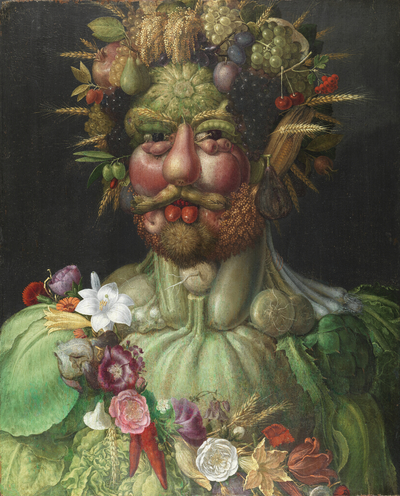
Rudolph II as Vertumnus

Rudolf II

Vertumnus is an allegorical portrait of Arcimboldo’s employer, the Holy Roman Emperor Rudolph II. The portrait, named after Vertumnus, god of the seasons, is composed by fruits and vegetables. The composition as a whole symbolizes how Rudolph’s reign is in perfect harmony with nature, whereas every individual object carries its own symbolic meaning. Vertumnus is known worldwide and has been reproduced in all imaginable contexts, but its placement in Skokloster Castle, Sweden, remains largely unknown.

https://www.europeana.eu/portal/en/exhibitions/faces-of-europe#ve-anchor-intro_3-js

mai mult
Neo-Babilon

SØR Rusche Collection

Pictura

The SØR Rusche Collection of 17th-century Dutch and Flemish works, amassed over three generations, features exceptional examples of paintings by lesser-known Golden Age artists.

Together they offer a broad survey of Dutch painting and a fascinating insight into the diverse range of art that was created and collected in the Netherlands during that period. Exhibition on view in London 3, 5 & 7 May.

Read more: sothebys.com

mai mult
Neo-Babilon

Picasso’s Afghan Hound

Picasso
Pablo Picasso’s Femme au chien 1962, is a highlight of the upcoming Impressionist & Modern Art Evening Sale (14 May 2019, New York).

At any given point in Pablo Picasso’s life, a veritable menagerie could be found in his home and studio. Dogs of all shapes and sizes, a variety of felines, doves, a parrot, an owl, a goat – indoors and out of doors these animals would appear, disappear, reappear.

The titular dog in Femme au chienhis Afghan hound Kaboul, is rendered with clear affection and humor – a nod to Picasso’s adoration of these creatures. Canines of various sorts are present in Picasso’s works throughout his oeuvre: the emaciated figures of his Rose Period; his serial reinterpretations of Velazquez’s Las Meninas; and his dachshund Lump (who he “borrowed” from David Douglas Duncan for many years) along with his Afghan hounds, Kasbek and Kaboul and his boxer Jan.

Read more (sothebys.com)

mai mult
Neo-BabilonPromovate

Isidore Isou et la Roumanie au Centre Pompidou

Isou

Isidore Isou est un artiste et théoricien franco-roumain, connu pour être à l’origine du lettrisme. Tableaux, films, objets, dessins, publications : autant d’œuvres qui constituent un corpus complet, permettant de saisir l’essence même de l’artiste. Ses œuvres monographiques s’installent au Centre Pompidou jusqu’au 20 mai, dans le cadre de la saison roumaine.

L’artiste, précoce, se passionne dès son plus jeune âge pour la littérature et la philosophie. En 1946, il contribue à la création du lettrisme en publiant son essai théorique « Introduction à une nouvelle poésie et à une nouvelle musique ». Le lettrisme est ce mouvement qui envisage le mot en tant que son, en laissant de côté l’aspect signifié.

Isou aime coucher sur papier ses réflexions, peu importe le sujet : il rédigera des essais, dans lesquels il disserte sur plusieurs disciplines, économie, politique, architecture… Il échange également beaucoup avec ses contemporains : Raymond Queneau, Gabriel Pomerand, Maurice Lemaitre.

Si Isou est à l’origine du lettrisme, il a également dessiné les contours de plusieurs autres concepts, que Nicolas Liucci-Goutnikov dévoile en quatre temps. Le commissaire de l’exposition a choisi de répartir ses œuvres au sein des quatre concepts, qui correspondent à des pratiques essentielles dans l’art de la seconde moitié du 20e siècle : « Amplique et ciselant », « Hypergraphie », « Peinture hypergraphique », « Du cadre supertemporel à la méca-esthétique ». L’exposition se déroule donc naturellement, des débuts du lettrisme, à l’art infinitésimal,  en passant par le domaine pictural.

Isidore Isou, une saison roumaine
Centre Pompidou
Jusqu’au 20 mai
centrepompidou.fr

mai mult
Neo-Babilon

BRODERIES DE TRADITION BYZANTINE EN ROUMANIE DU XVE AU XVIIE SIÈCLE AUTOUR DE L’ÉTENDARD D’ÉTIENNE LE GRAND

Inalt

Dans le cadre de la Saison France-Roumanie 2019 et à l’occasion du prêt emblématique par la Roumanie de la Bannière de saint Georges du prince Étienne le Grand, l’exposition se propose de mettre en valeur le caractère exceptionnel des collections roumaines de broderies religieuses de tradition byzantine et post-byzantine, fleuron du patrimoine roumain et universel.

Autour du chef-d’œuvre offert par Étienne le Grand (1457-1504) au monastère de Zographou au Mont Athos, récupéré par un détachement de l’armée française pendant la Première Guerre mondiale et remis solennellement par la France à l’État roumain en 1917, une trentaine d’œuvres insignes illustreront l’extraordinaire développement de la broderie de tradition byzantine en Roumanie du milieu du XVe au milieu du XVIIe siècles.

Les textiles réunis dans l’exposition sont présentés en trois grands ensembles, correspondant essentiellement à leur fonction et usage.

Le premier ensemble évoque la « panoplie sacerdotale » des évêques, des prêtres et des diacres, héritée de Byzance : epitrachelion(étole), epigonation (tissus en forme de losange), epimanikia (manchettes), orarion (étole des diacres). A leurs côtés, le célèbre manuscrit des Œuvres de saint Denis Aréopagite offert en 1408 au trésor de Saint-Denis par l’empereur Manuel II Paléologue et un saint Nicolas de la fin du XVIe siècle attribué à Michel Damaskinos aideront le public à mieux comprendre le vêtement sacertodal orthodoxe.

Le deuxième ensemble est dévolu à la « panoplie liturgique », textiles destinés à la célébration de la liturgie : voiles de calice et de patène (grand aer et petits aers), epitaphioi, voile d’icône / podea, rideau d’iconostase / katapetasma ex votos. Pour comprendre l’usage des epitaphioi dans l’espace liturgique sera exposé en regard un relevé des fresques de l’église de la Vierge Peribleptos de Mistra issu des archives Gabriel Millet.

Enfin, le troisième ensemble, unique au monde, rassemble de spectaculaires couvertures de tombeaux princiers, dans lesquelles le caractère hiératique des images byzantines cède bientôt le pas à la tentation du portrait. À partir de la célèbre Marie de Mangop, l’exposition esquisse les grands traits d’une typologie princière jusqu’au XVIIe siècle, avec les deux princes Mogila de Sucevita et les deux portraits de Iasi, celui de la princesse Tudosca, épouse de Basile le Loup et celui de leur fils Ioan. La présentation de de l’effigie d’une impératrice byzantine gravée au XVIIe siècle, permet d’inscrire les chefs-d’œuvre roumains dans une longue tradition.

L’exposition se clôt par l’évocation de la figure de Gabriel Millet (1867-1953), qui sillonna la Grèce et les Balkans et rapporta de ses voyages une documentation photographique et aquarellée irremplaçables.

Commissaire(s) :

Pour la partie française : Jannic Durand, directeur du département des Objets d’art, et Dorota Giovannoni, documentaliste scientifique au département des Objets d’art, musée du Louvre.
Pour la partie roumaine : Emanuela Cernea, conservatrice en chef, et Iuliana Damian, conservatrice, département d’Art roumain ancien, Musée national d’art de Roumanie.


(saisonfranceroumanie.com)

mai mult
Neo-BabilonPromovate

Notre-Dame de Paris : après des heures de lutte, l’incendie a été maîtrisé par les pompiers

FRANCE-FIRE-NOTRE DAME

Le feu « est partiellement éteint, il reste des foyers résiduels », a expliqué le porte-parole des pompiers de Paris. Les deux tours de la cathédrale sont sauvées, mais les deux tiers de la toiture ont été ravagés. Le parquet de Paris a ouvert une enquête préliminaire pour « destruction involontaire par incendie ».

LES FAITS

  • Plusieurs centaines de pompiers sont intervenus lundi 15 et mardi 16 avril pour éteindre l’incendie qui a ravagé la cathédrale. Selon le porte-parole de Notre-Dame, l’incendie se serait déclaré aux alentours de 18 h 50.
  • Alors que le feu a pris dans les combles de la cathédrale, la flèche s’est effondrée sur elle-même. « Les deux tiers de la toiture de Notre-Dame ont été ravagés », a précisé le général Jean-Claude Gallet, commandant de la Brigade des sapeurs-pompiers de Paris.
  • Le président de la République, Emmanuel Macron, qui a reporté à mardi son allocution, a annoncé sur place le lancement d’une souscription nationale. « Nous rebâtirons Notre-Dame », a-t-il lancé.
  • Le parquet de Paris a ouvert une enquête préliminaire, confiée à la direction régionale de la police judiciaire, pour « destruction involontaire par incendie ».

(lemonde.fr)

mai mult
Neo-Babilon

Australian rugby star Israel Folau set to get dumped over homophobic social media posts

folau

Australian rugby player Israel Folau is set to have his contract terminated following “unacceptable” homophobic and transphobic comments posted on social media.

The New South Wales Waratahs player shared an image on Instagram Wednesday, warning drunks, homosexuals, adulterers, liars, fornicators, thieves, atheists, and idolaters that “hell awaits you.”
“Jesus Christ loves you and is giving you time to turn away from your sin and come to him,” the 30-year-old Wallabies player, who also plays for Australia’s national team, captioned the image.
Rugby Australia, the sport’s national governing body, said Thursday that it was their intention to terminate his contract.
“Whilst Israel is entitled to his religious beliefs, the way in which he has expressed these beliefs is inconsistent with the values of the sport,” Rugby Australia’s chief executive Raelene Castle and New South Wales Union chief executive Andrew Hore said in a statement.
“We want to make it clear that he does not speak for the game with his recent social media posts.”
They said they had made repeated attempts to contact Folau and his representatives following the posts, but he had failed to communicate directly with either organization. Earlier, Rugby Australia had released a statement calling the content of the post “unacceptable.”
“As a code we have made it clear to Israel formally and repeatedly that any social media posts or commentary that is in any way disrespectful to people because of their sexuality will result in disciplinary action,” Castle and Hore said.
“We want everyone to feel safe and welcome in our game and no vilification based on race, gender, religion or sexuality is acceptable and no language that isolates, divides or insults people based on any of those factors can be tolerated.”
Folau, who broke the all-time record for Super Rugby tries earlier this month, also tweeted a screenshot of the news that Tasmania Wednesday became the first Australian jurisdiction to make gender optional on birth certificates.
“The devil has blinded so many people in this world, repent and turn away from your evil ways,” he captioned the screenshot.
Both the tweet and the post are still online. CNN has reached out to both Rugby Australia and Folau for comment.
On Friday, England rugby player Billy Vunipola published an Instagram message in support of Folau.

Widespread outrage

Folau’s comments have attracted criticism online, including in neighboring New Zealand where rugby is a hugely popular support. Folau’s wife, Maria Folau, is a netball player on New Zealand’s national team, the Silver Ferns.
New Zealand Prime Minister Ardern told media Thursday she didn’t agree with Folau’s comments.
“I’m very mindful of the fact that he’s a role model, he’s a person in a position of influence, and I think that with that comes responsibility,” she said. “This is our rainbow community, there’s a lot of vulnerable people there.”
Qantas, a major sponsor of the Wallabies, has also condemned Folau’s post. “These comments are really disappointing and clearly don’t reflect the spirit of inclusion and diversity that we support,” a Qantas spokesman said in a statement sent to CNN.
“We are pleased to see Rugby Australia’s condemnation of the comments and will await the outcome of their review.”
It’s not the first time Folau has been outspoken against gay people. In April 2018, Folau was criticized for writing in an Instagram comment that gay people would go to hell unless they repented, and had previously said he would be voting against marriage equality in Australia’s postal survey.
All Blacks player TJ Perenara and “Thor: Ragnorok” filmmaker Taiki Waititi were among those to condemn Folau’s comments on Twitter.
Welsh rugby union referee Nigel Owens, who is gay, wrote in a column for Wales Online, “When young people in particular see comments like this, and not just from our sporting stars but from anybody, it could be enough to push those people over the edge.”
Qantas expressed disappointment with the posts, but said it would continue to sponsor the Wallabies.

‘Hate speech’

Folau defended his earlier comment in a column for Players’ Voice, writing that accusations of homophobia “could not be further from the truth.”
The following month, Folau posted a video on Twitter of a sermon by American evangelist David Wilkerson, in which Wilkerson condemns “rampant iniquity” and “sexual perversions beyond description” as footage of activists waving rainbow flags plays.
Speaking on Fox Sports’ “Kick & Chase” the same month, Rugby Australia Chief Executive Raelene Castle said Folau’s homophobic comments were the “singularly most difficult thing I’ve ever had to deal with” in his career.
Castle defended Rugby Australia’s decision not to sanction Folau, saying: “On one hand it’s a human rights issue but on the other hand, you’re dealing with freedom of speech.
“We’ve had conversations with Izzy about presenting his views in a respectful way,” Castle said. “He is walking the line, we will continue the dialogue.”
James Lolicato, co-founder of Australian charity Proud 2 Play — which “focuses on increasing LGBTI+ engagement in sport, exercise and active recreation” — told CNN that Folau’s latest comments “are not only demeaning to LGBTI+ people, but also are discriminatory.”
“We see the negative consequences that arise from comments such as these from high-level players, be that of young LGBTI+ people feeling isolated and afraid to get involved in sport, or the modeling of these comments and behaviors in other people,” Lolicato said.
“Rugby needs to look at its vilification policies and sanction Israel to show that they really are a sport for everybody,” he added.
“We can no longer mask hate speech as ‘free speech’ and need to make sure that discrimination of all forms is properly tackled in sport.”
Folau’s New South Wales Waratahs team was not immediately available for comment.
Described as a “freak of an athlete” with “exceptional physical prowess,” Folau has played 63 times for Australia. Prior to converting to rugby union, the 30-year-old played professional rugby league and Australian rules football.
(Julia Hollingsworth and Emily Dixon, CNN – edition.cnn.com)
mai mult
1 3 4 5 6
Page 5 of 6